The Sound of a Room: How Acoustic Thoughtfulness Transforms the Way a Space Feels to Inhabit
You have almost certainly experienced the phenomenon without having a name for it. You walk into a room and something feels off—not visually, not spatially, but in some less definable way. Voices seem to bounce. Footsteps announce themselves too loudly. The ambient noise of the household—the hum of an appliance, a conversation in an adjacent room, the street beyond the window—feels closer than it should. The room is beautiful, perhaps, but it does not feel restful.
What you are experiencing is the acoustic character of the space, and it is one of the most consequential and least discussed dimensions of interior design.
Sound behaves according to the same physical principles in every room: it travels outward from its source, reflects off hard surfaces, is absorbed by soft ones, and accumulates into what acousticians call reverberation. The longer sound lingers in a room before dissipating, the more fatiguing and chaotic that room feels to inhabit. The faster it is absorbed, the more peaceful the experience of being within it. Every material decision a designer makes—flooring, wall finish, upholstery, window treatment, ceiling treatment—is, whether acknowledged or not, an acoustic decision.
Hard Surfaces and the Problem of Reverberation
The contemporary American interior has, in many ways, become acoustically challenging by design. Open floor plans, polished concrete and hardwood floors, minimal window treatments, and the prevalence of smooth painted walls create environments in which sound has very few opportunities to be absorbed. The result is often a room that feels energetic and modern to the eye but exhausting to the ear.
This is particularly evident in kitchens and dining areas, where hard surfaces are concentrated by necessity and conversation must compete with the reflective properties of tile, stone, and glass. It is also common in loft-style spaces and renovated industrial properties, where the architectural character that makes the space visually compelling—exposed brick, concrete ceilings, large windows—conspires to create a reverberation problem that no amount of furniture can fully resolve on its own.
Understanding this dynamic is the first step toward addressing it. The goal is not to eliminate reflective surfaces—they contribute to the liveliness and visual interest of a room—but to balance them with sufficient absorptive material to bring reverberation within a comfortable range.
Textiles as Acoustic Tools
The single most accessible and cost-effective acoustic intervention available to any homeowner is the strategic introduction of textiles. Upholstered furniture, area rugs, drapery panels, decorative pillows, and throws all absorb sound, and their cumulative effect on the acoustic character of a room is substantial.
A well-chosen area rug in a room with hardwood floors does more than define a seating zone or add visual warmth—it eliminates the sharp, percussive quality of footsteps and reduces the reflection of mid-frequency sound that makes speech difficult to understand across a room. The denser and thicker the rug pile, the more effective it is acoustically. A rug pad beneath it adds a further layer of absorption and extends the life of the rug itself, making it one of the more straightforward investments in acoustic comfort.
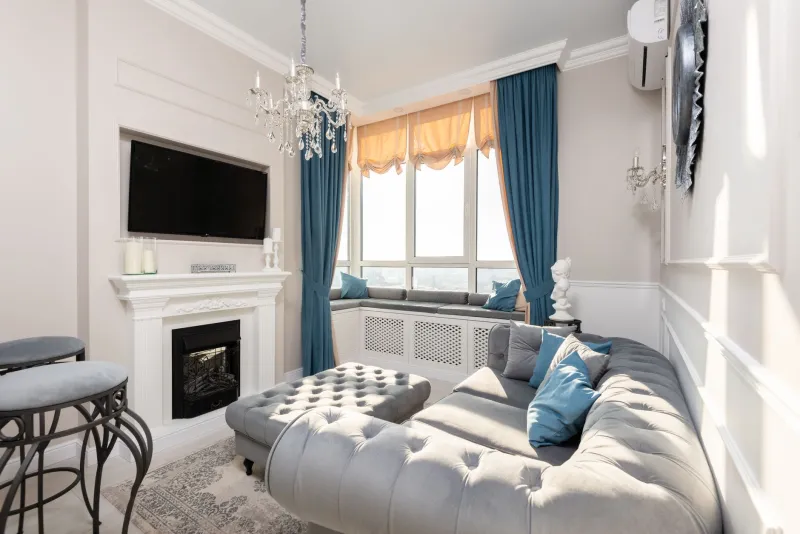
Drapery is similarly effective, particularly when the panels are made from heavier fabrics such as velvet, wool, or a lined linen. Floor-to-ceiling drapery panels—beyond their considerable visual advantages—cover a substantial area of what would otherwise be a reflective wall surface, and their soft folds create irregular surfaces that scatter and absorb sound more effectively than flat panels would. This acoustic benefit costs nothing additional; it is a natural consequence of choosing quality window treatments.
Upholstery, Cushions, and the Soft Furnishing Dividend
One of the more compelling arguments for investing in well-upholstered furniture is the acoustic dividend it pays. A room furnished with generously cushioned sofas and chairs, upholstered dining chairs, and fabric-covered ottomans is a room with a significantly lower reverberation time than one furnished primarily with hard seating. This is not a coincidence; it is physics.
For homeowners who are drawn to the clean lines of contemporary furniture—pieces with minimal upholstery and exposed wood or metal frames—the acoustic shortfall can be addressed through other means. Throw pillows in abundance, a pair of upholstered accent chairs positioned to absorb sound in the center of the room, or a generously sized sectional with deep cushions can restore the acoustic balance that spare furniture removes.
The principle here is cumulative softness: no single piece resolves the acoustic character of a room, but each soft element contributes to an overall environment that feels genuinely comfortable to inhabit.
Walls, Art, and the Case for Texture
Painted drywall is acoustically one of the least forgiving wall finishes, reflecting sound almost as efficiently as glass. This does not mean that smooth walls are to be avoided—they are a practical and beautiful choice in many interiors—but it does mean that they benefit from acoustic counterbalance.
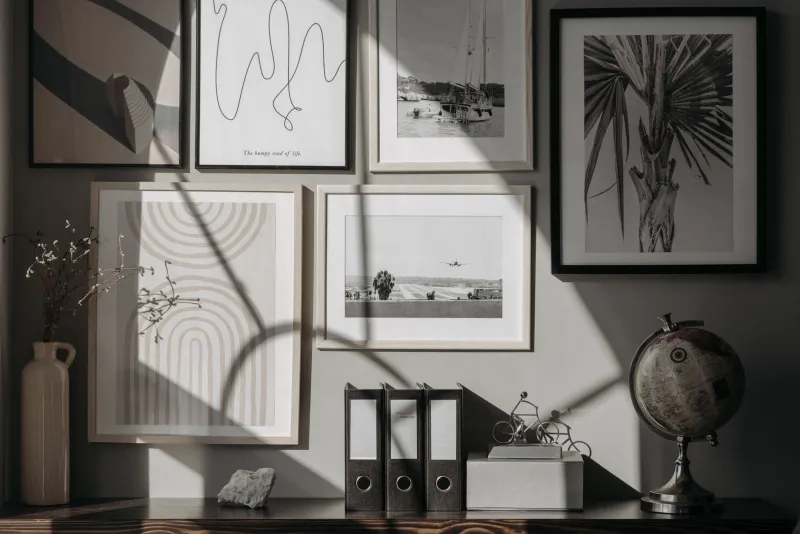
Large-scale textile art, fabric wall panels, and upholstered headboards all absorb sound while contributing to the visual richness of a room. A gallery wall of framed artwork, while not as absorptive as textile, introduces the irregular surface variations that scatter sound and reduce the sharpness of reflections. Even a substantial bookcase filled with books performs a modest but meaningful acoustic function, its varied surface geometry diffusing sound rather than reflecting it cleanly.
Wall-hung textiles—tapestries, woven panels, macramé in a contemporary context—have experienced a design revival in recent years, and their acoustic value is part of the reason they feel so instinctively right in rooms that might otherwise feel too hard and resonant.
Ceiling Treatments and the Overlooked Plane
The ceiling is the surface most often neglected in acoustic planning, yet it is frequently the most significant contributor to a room's reverberation problem. Sound rises, reflects off the ceiling, and returns to the room with considerable energy. In rooms with particularly high or vaulted ceilings—spaces that are architecturally dramatic but acoustically unforgiving—this dynamic can make normal conversation feel like an effort.
Coffered ceilings, which introduce depth and shadow into the ceiling plane, scatter sound more effectively than flat ceilings. Fabric canopies, stretched textile ceiling panels, and even the strategic placement of pendant lighting with fabric shades all introduce absorptive material at the ceiling level. In rooms where a dramatic ceiling is part of the design intent, these interventions can preserve the visual impact while significantly improving the acoustic experience.
Serenity as a Design Standard
The quietest rooms are not always the most minimally furnished—they are the most thoughtfully layered. Every material that absorbs sound is, in most cases, also a material that adds warmth, texture, and visual interest to a room. The overlap between acoustic intelligence and elegant design is not incidental; it reflects the deeper truth that the most beautiful interiors are those that engage all of the senses, not merely the eye.
Designing for acoustic comfort requires no specialized expertise and, in many cases, no additional budget. It requires only the recognition that a room's sound is as much a part of its character as its color or its light—and that a space which sounds serene will always feel more delightful than one which merely looks it.