In Praise of the Small Gesture: How Considered Details Elevate a Room From Ordinary to Unforgettable
Every great room has a secret. Ask a designer to explain why a particular space feels so undeniably right — so alive, so polished, so distinctly itself — and they will rarely point to the sofa or the rug or the paint color, though all of these matter. More often, they will gesture toward something smaller. The way the crown molding turns a corner. The weight of the door handle. The single ceramic object on the shelf that somehow anchors the entire room. Great design, it turns out, lives in the details — and the good news is that details are among the most accessible, most budget-conscious ways to transform a space.
This is not a guide to renovation. It is a guide to attention. What follows is a collection of small, often-overlooked design choices that carry an outsized influence on how a room feels — and how it is remembered.
01. Hardware: The Jewelry of a Room
If furniture is the architecture of a room, hardware is its jewelry. Cabinet pulls, drawer knobs, door handles, and hinges are among the most touched, most noticed, and most frequently underestimated elements in any interior.
Replacing builder-grade hardware with thoughtfully selected alternatives is one of the highest-return investments in residential design. A kitchen with standard stainless pulls can be transformed by switching to unlacquered brass — a finish that develops a warm, living patina over time. A bathroom vanity with forgettable chrome knobs becomes something far more considered when fitted with hand-cast ceramic hardware or slim, architectural levers in a matte black finish.
The key is consistency with purpose. Hardware does not need to match throughout an entire home, but it should feel intentional within each space. A mix of finishes can be extraordinarily elegant when handled with care — brushed nickel alongside warm brass, for instance, reads as sophisticated rather than mismatched when the underlying forms share a similar sensibility.
Practical tip: Budget approximately $3–$8 per pull for mid-range options and $12–$30 for artisan or designer pieces. For a standard kitchen with 30 cabinets, this remains a modest investment relative to the visual impact achieved.
02. Trim and Molding: The Architecture You Already Have
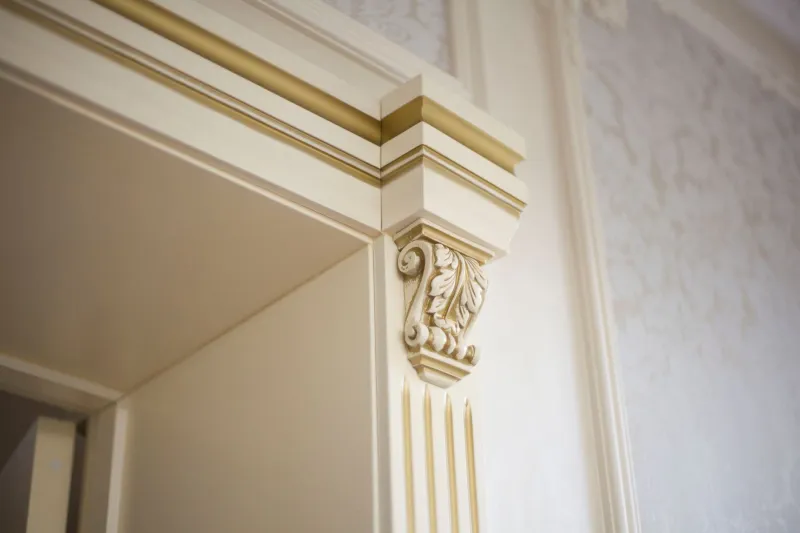
Baseboards, door casings, window surrounds, and crown molding are often treated as afterthoughts — painted the same white as the walls and promptly forgotten. This is a significant missed opportunity.
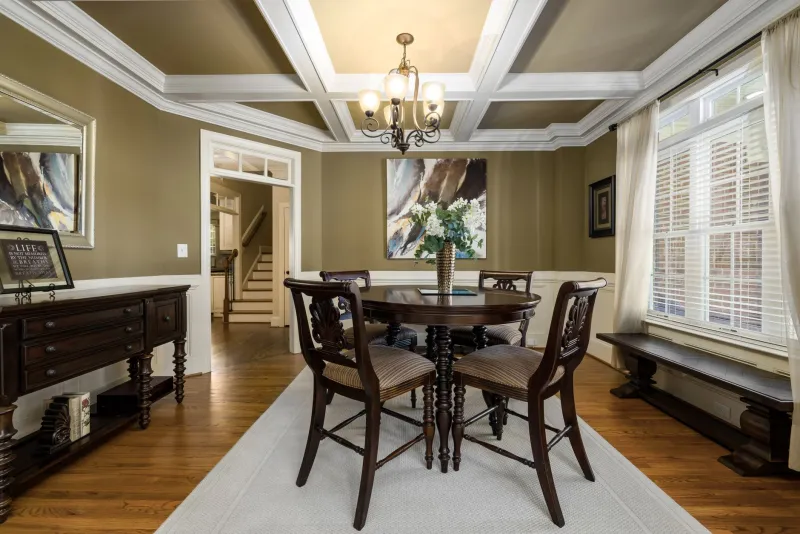
Trim is the framework of a room. When it is given genuine consideration, it becomes one of the most powerful architectural tools available without structural renovation. Consider painting trim in a contrasting color — a deep navy baseboard against a soft white wall, or a warm greige casing against a painted accent wall — to create definition and visual weight. Alternatively, scaling up the trim profile itself (replacing a modest 3-inch baseboard with a more substantial 5- or 6-inch version) instantly lends a room a sense of craftsmanship and permanence.
For older American homes in particular, restoring original trim details — or adding period-appropriate millwork where it has been removed — reconnects a space to its architectural heritage in ways that feel genuinely rooted rather than decorative.
03. The Power of the Single Considered Object
There is a principle in design sometimes called the "hero object" — the one piece in a vignette or on a shelf that earns its place not through size or cost, but through presence. It might be a hand-thrown ceramic vessel, an unusual piece of coral, a small bronze sculpture, or a single book whose spine color completes a composition.
The discipline here is restraint. Most rooms suffer not from too few objects but from too many — a proliferation of items that collectively produce visual noise rather than meaning. Editing ruthlessly and then placing one genuinely loved, genuinely interesting object with care will do more for a room's personality than filling every surface with decorative accessories.
When selecting objects for a space, ask: Does this have a story? Does it have physical integrity — weight, texture, a material quality that rewards close attention? If the answer to either question is yes, it has earned its place.
04. Light Switch Plates and Outlet Covers: The Detail Everyone Notices Unconsciously
This one surprises people, but designers know it well. Standard white plastic switch plates are among the most disruptive visual elements in an otherwise refined interior. They draw the eye precisely because they feel out of place — too utilitarian, too mass-produced, too much at odds with carefully chosen furnishings.
Switching to metal switch plates — in unlacquered brass, oil-rubbed bronze, or brushed nickel — takes minutes and costs very little. Yet the effect is immediate. The room feels more cohesive, more finished, more intentional. This is the kind of detail that visitors cannot quite name but invariably feel.
05. Window Treatments: Hung High, Hung Wide
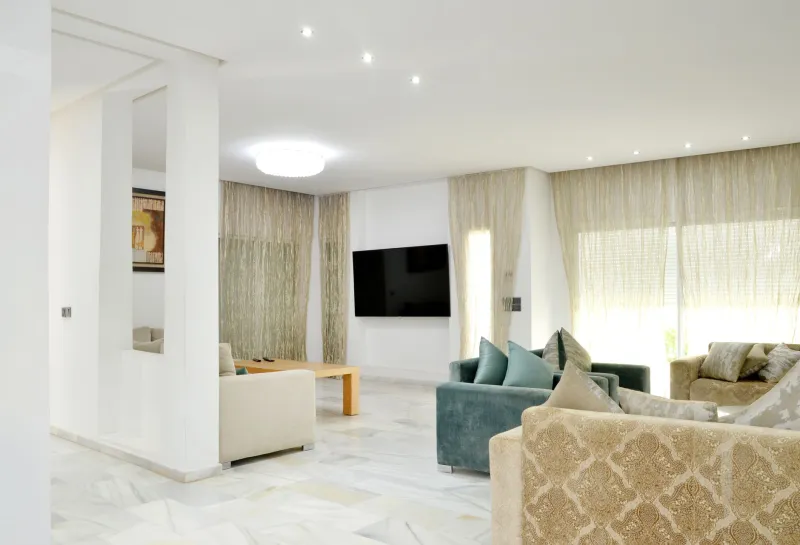
The single most common error in residential window treatment is hanging curtain rods at window height rather than ceiling height. Curtains hung close to the window frame make ceilings feel lower, windows feel smaller, and rooms feel compressed.
Hanging rods as close to the ceiling as possible — and extending them 8 to 12 inches beyond the window frame on each side — creates the illusion of taller ceilings and grander windows. This requires no additional cost beyond longer curtain panels, yet the transformation in perceived scale is dramatic. It is one of the most reliable designer techniques for making any room feel more spacious and more elegant.
06. The Unexpected Ceiling Treatment
While a full ceiling redesign is a larger undertaking, even modest ceiling details can shift the entire mood of a room. A simple application of wallpaper to a dining room ceiling, a coat of paint in a deep or unexpected color, or the addition of a basic picture-rail molding near the ceiling line can each introduce a layer of surprise and delight that most rooms entirely lack.
Ceilings represent roughly a third of the visual surface area of any room. Treating them as a fifth wall — worthy of the same consideration given to floors and furnishings — opens a range of design possibilities that remain genuinely underexplored in most American homes.
The Cumulative Effect of Care
No single detail on this list will transform a room on its own. The magic lies in their accumulation — in the cumulative effect of many small decisions made with care and intention. A room in which the hardware has been thoughtfully selected, the trim has been given proper weight, the objects have been curated rather than collected, and the curtains have been hung with architectural awareness is a room that announces, quietly but unmistakably, that someone has paid attention.
And attention, in the end, is what distinguishes a designed space from a merely decorated one. It is what makes a room not just beautiful, but delightful — the quality we at A Delightful Design hold as the highest standard of all.