Light in Layers: The Professional Secret Behind Rooms That Feel Right at Every Hour
The Element Most Often Underestimated
Walk into a room that feels inexplicably right — warm, composed, effortlessly elegant — and your eye will likely credit the furniture, the palette, or the carefully chosen art. Rarely does a guest pause and say, the lighting is extraordinary. And yet, remove the lighting strategy from that room and replace it with a single overhead fixture, and the same furnishings will feel flat, institutional, even cold.
Lighting is the invisible architecture of interior design. It shapes how color reads, how texture registers, how generous or intimate a space feels. Designers who have spent years refining residential and commercial interiors will say, consistently, that no other single investment transforms a room as completely as a thoughtful approach to light. Understanding why — and knowing how to apply the principle in your own home — begins with one foundational concept: the hierarchy of layers.
Three Layers, One Cohesive Effect
Professional lighting design operates on three distinct registers, each serving a different purpose and each essential to the whole.
Ambient light is the base layer — the general illumination that allows a room to function. In most American homes, this is handled by a ceiling fixture or recessed cans, often on a single circuit. Ambient light establishes the overall brightness of a space, but when it is the only source, it tends to flatten surfaces, eliminate shadow, and produce the kind of harsh, even wash that makes a beautifully furnished room look more like a waiting area than a sanctuary.
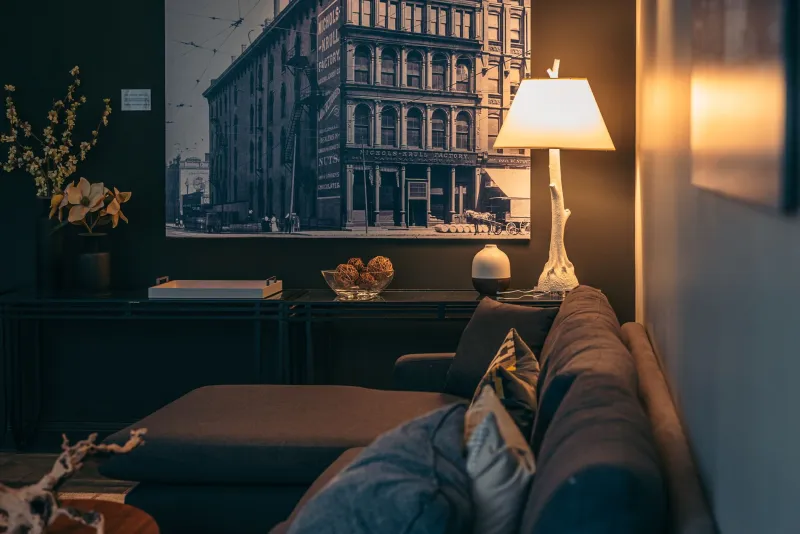
Task light is precisely what it sounds like: focused illumination directed at the places where work, reading, cooking, or grooming actually happens. A well-positioned reading lamp beside an armchair, undercabinet lighting in a kitchen, a lighted mirror in a bathroom — these sources solve practical problems without demanding that the entire room be flooded with brightness. Task lighting gives occupants control, allowing them to illuminate what they need without disturbing the atmosphere of the broader space.
Accent light is where elegance truly enters. This layer draws attention to the elements worth celebrating — a piece of art, an architectural detail, a collection of objects arranged on a shelf. Picture lights, directional spotlights, and even the warm glow of a candle all function as accent sources. They create depth, introduce shadow, and give a room a sense of dimension that no amount of ambient light can replicate.
The sophistication lies not in any one layer but in the relationship between all three, tuned to the hour of day and the activity at hand.
Why Dimmers Are Non-Negotiable
A layered lighting plan without dimmer controls is only half realized. Dimmers are what allow a room to shift registers — from the bright, task-ready environment of a Sunday morning kitchen to the low, ambient warmth of an evening dinner party — without changing a single fixture. They are among the most cost-effective upgrades available to any homeowner, and yet they remain chronically underused.
For new construction or significant renovation, the conversation about dimming should happen before walls are closed. For existing homes, most standard switches can be replaced with compatible dimmer units, provided the bulbs are dimmable LED — a specification worth confirming before purchasing either component. Every circuit that carries ambient or accent light is a candidate for dimmer control. Task lighting may remain fixed in certain applications, though adjustable options exist for nearly every category.
Room-by-Room Considerations
The hierarchy of layers applies universally, but its specific expression shifts by room type.
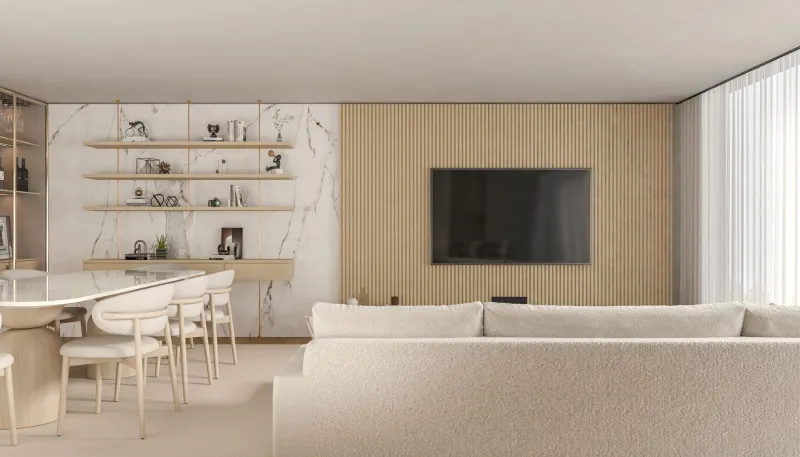
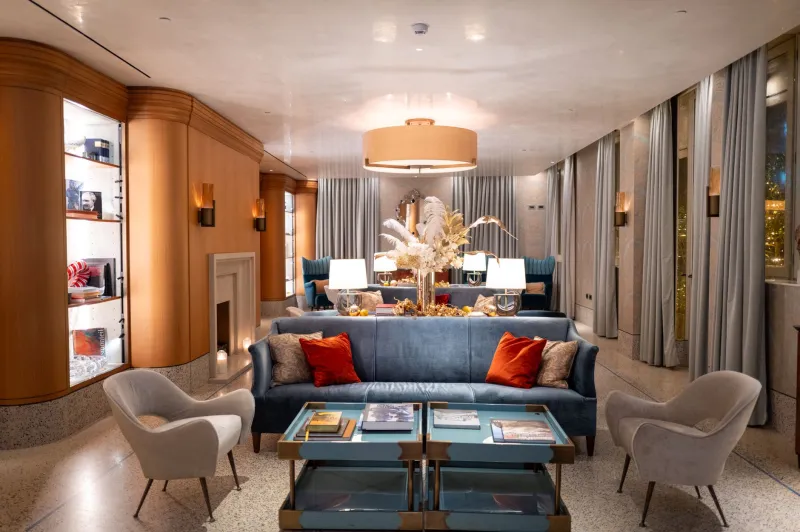
Living rooms benefit from the greatest flexibility. A combination of recessed ambient lighting, floor and table lamps for task and warmth, and directional accent fixtures for art or architectural features gives occupants the widest possible range of atmospheres. Avoid centering the room's entire lighting plan on a single chandelier, however beautiful — it is a statement piece, not a complete strategy.
Kitchens are frequently over-lit in the ambient register and under-served in the task register. Recessed cans on a dimmer provide the base layer, while undercabinet strips deliver the focused illumination that makes food preparation genuinely easier and safer. A pendant or two above an island introduces visual warmth and a degree of accent interest without competing with the work surfaces below.
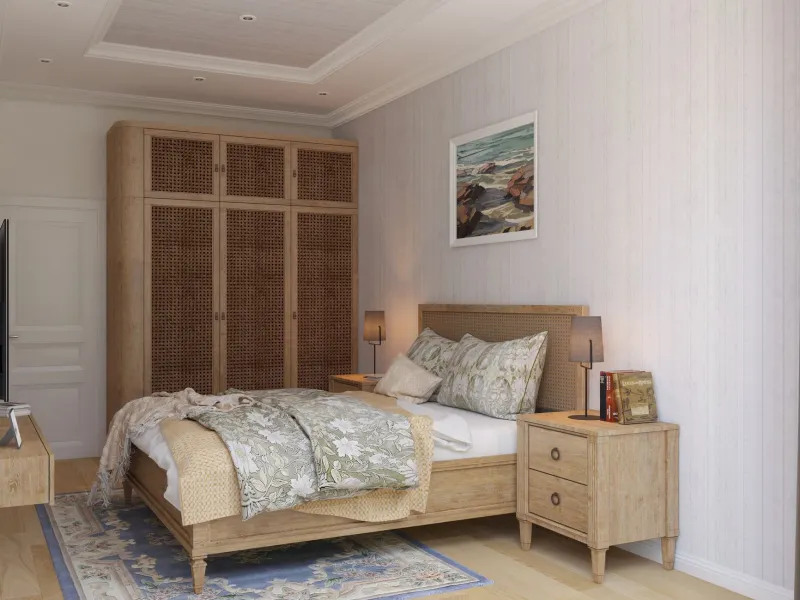
Bedrooms call for restraint in ambient brightness and generosity in layering. Bedside lamps with individual controls allow partners to read independently; a low-level ambient source on a dimmer supports dressing and movement without the jarring quality of overhead brightness at close range. Accent lighting in a bedroom — a small picture light, a softly illuminated niche — contributes to the quality of repose that the room is meant to provide.
Bathrooms, particularly primary suites, deserve more nuance than a single overhead fixture above the vanity. Side-lit mirrors — with light sources positioned at roughly face height on either side — eliminate the unflattering shadows cast by overhead-only illumination. A separate, softer ambient source on a dimmer allows the bathroom to function as a space of genuine restoration rather than purely utilitarian brightness.
Fixture Selection as a Design Statement
Beyond function, fixtures are objects — and as objects, they carry visual weight, period association, and material character. A hand-blown glass pendant speaks differently than a polished-nickel arm lamp; an articulating pharmacy lamp signals something distinct from a ceramic table lamp with a linen shade. The fixtures you choose should participate in the room's broader design conversation rather than simply perform a mechanical role.
This does not mean every fixture must be a centerpiece. Many of the most elegant rooms in American design rely on fixtures that are deliberately quiet — simple forms in warm metals or matte finishes that recede into the composition and allow the light itself to take precedence. The discipline is in knowing which fixtures to celebrate and which to subordinate, a judgment that mirrors the broader principle of editing that governs every well-resolved interior.
Investing Where It Matters Most
Lighting is one of the few categories in interior design where the investment — made thoughtfully and early — compounds across every other element in the room. The right light makes your furniture look better, your paint color read truer, your art more commanding, and your daily experience of the space more genuinely pleasurable.
If budget requires prioritization, begin with the rooms where you spend the most time and where the quality of atmosphere matters most. Install dimmers. Layer your sources. Resist the impulse to solve every lighting need with a single overhead fixture, however handsome it may be. The rooms that feel truly extraordinary — the ones that guests remember and that you never tire of inhabiting — are almost always the rooms where someone took light seriously, long before the first piece of furniture arrived.