Always Ready, Never Rigid: How to Design a Guest Room That Lives Well Every Day
There is a particular kind of room that most households know well: the guest room that exists in a state of nervous anticipation. The bed is made with hotel-like precision. The surfaces are cleared of anything personal. The closet holds only empty hangers and perhaps a spare blanket folded with architectural care. It is, in every measurable sense, perfect — and yet when guests actually arrive, something feels slightly off. The room does not feel inhabited. It feels staged.
This is the central paradox of guest room design. In striving to present a space that is immaculate and welcoming, many homeowners inadvertently create something that feels neither. The solution is not to lower standards, but to reconsider what genuine hospitality actually looks like — and to design accordingly.
The Problem With Perfection as a Default
A room held in permanent readiness is a room that is never truly at rest. It requires continuous maintenance, creates low-grade domestic anxiety, and often results in a space that feels more like a display than a destination. Guests, for their part, tend to sense this. They tread lightly, hesitate to use the dresser drawers, and feel vaguely guilty for disrupting the arrangement.
True hospitality communicates ease, not effort. It says: this space was made for you, and it will accommodate you without ceremony. That quality — warmth without performance — is what the best guest rooms achieve. And it begins not with the right bedding or the right lamp, but with a foundational design philosophy that treats the room as a living part of the home rather than a holding space between occasions.
Design for Dual Purpose From the Beginning
One of the most practical shifts a homeowner can make is to stop thinking of the guest room as a single-use space. In most American homes, a dedicated guest room sits empty for the majority of the year. Designing it exclusively around those occasional visits means accepting an underutilized room that still demands upkeep.
Instead, consider what secondary function the room might serve. A reading room or quiet home office that converts seamlessly for guests is far more livable than a dormant bedroom. A daybed with a quality mattress topper and well-chosen bolsters can function as a comfortable seating arrangement on ordinary days and transform into a proper sleeping space when needed. Murphy beds have evolved considerably in recent years — the finest versions integrate into custom millwork so naturally that the room reads as a study or lounge until the moment a guest arrives.
This dual-purpose approach does not compromise hospitality. It enhances it, because a room that is genuinely used day-to-day tends to feel warmer, more considered, and more alive than one that is perpetually preserved.
Choose Materials That Forgive Gracefully
The materials you select for a guest room should be chosen with a specific quality in mind: they should look equally good whether the room has been freshly prepared or simply lived in for a few days. This is a different standard than purely aesthetic beauty, and it matters enormously in practice.
Linen bedding, for example, has an inherent texture that makes it appear appropriately relaxed even when not freshly pressed. It does not demand perfection. A well-chosen wool throw draped casually over the foot of the bed looks intentional whether it has been arranged with care or simply pulled back and left. Dark-stained hardwood floors show less between cleanings than pale finishes. Upholstered headboards in performance fabrics handle the wear of actual use without visible protest.
The goal is to select materials that participate in the room's ease rather than working against it — surfaces and textiles that age honestly and look considered rather than tired.
Give Guests What Hotels Get Right — and What They Get Wrong
The hospitality industry has spent decades refining what makes a sleeping space feel welcoming, and there is much to borrow from that tradition. A quality mattress is non-negotiable. Layered lighting — including a bedside lamp with a warm bulb, adequate overhead light, and ideally a dimmer — allows guests to adjust the atmosphere to their preference. Blackout curtains or shades acknowledge that not every guest keeps the same schedule.
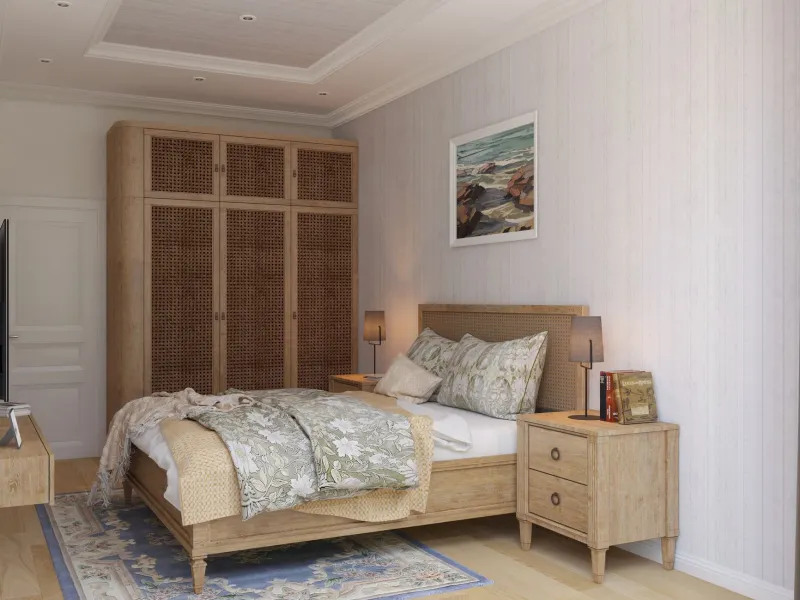
But hotels also get certain things profoundly wrong, and the private guest room has an opportunity to correct them. A hotel room is anonymous by design; a well-designed home guest room should feel personal without being intrusive. A small selection of books chosen with care, a piece of original artwork, a plant that is actually alive — these gestures communicate that a real person thought about this space with genuine attention.
A single drawer cleared and available for guest use, a few empty hangers in the closet, a small tray holding the Wi-Fi password and a charger — these practical provisions matter more than any decorative flourish. Hospitality, at its core, is the anticipation of need.
Maintain Without Obsessing
Perhaps the most liberating reframe in guest room design is this: a well-designed space should not require heroic effort to prepare for visitors. If getting the room ready for guests takes an entire afternoon, the room has not been designed well enough.
The solution lies partly in storage. A guest room with adequate, well-organized storage — for both the homeowner's occasional overflow and the guest's belongings — is a room that remains orderly without constant attention. A closed wardrobe keeps the space looking composed even when it is holding household items between visits. A lidded basket at the foot of the bed can hold extra blankets or seasonal items without disrupting the room's visual calm.
It also lies in choosing a color palette and furnishing scheme that reads as intentional across varying states of tidiness. A room with strong bones — good proportions, a considered palette, furniture that is appropriately scaled — will always look respectable, even on an ordinary Tuesday when no one is expected.
The Warmth That Welcomes
At its finest, a guest room communicates something quietly generous: that this household has thought about comfort, has made room for another person, and has done so without making that effort feel like an imposition on either party. It is a room that invites rest rather than demanding admiration.
Designing such a space requires releasing the idea that hospitality lives in perfection. It lives, instead, in warmth — in the quality of the light, the softness of the linens, the small provisions that say we thought of you without saying a word. A room designed with that intention will welcome guests beautifully, and it will live just as gracefully in the quiet days between.