From Flat to Luminous: The Designer's Method for Layering Light in Every Room
There is a particular kind of disappointment that settles over a beautifully furnished room when the lighting is wrong. The furniture may be impeccable. The palette may be considered and refined. Yet something feels off — a flatness, a harshness, or a sense that the space simply does not live up to its own potential. In nearly every such case, the culprit is not the sofa or the rug. It is the light.
Lighting design is among the most consequential decisions made in any interior, yet it is routinely treated as an afterthought — a matter of selecting fixtures rather than engineering atmosphere. Professional designers know otherwise. They understand that light is not a single element but a composition of multiple sources, each serving a distinct purpose, each contributing a different quality to the whole. Mastering this composition — what the design world calls layered lighting — is the surest way to elevate any space from adequate to genuinely elegant.
Understanding the Three Layers
Every well-lit room draws from three categories of light, and each plays a role that the others cannot replicate.
Ambient light is the foundational layer — the general illumination that allows a room to function. It is the overhead fixture, the recessed can lights, the flush-mount ceiling fitting. Ambient light answers the most basic question: can you see? But ambient light alone, particularly when it originates from a single ceiling source, tends to flatten a room. It casts even, shadowless light that eliminates depth and dimension, making a space feel more like a waiting room than a home.
Task light is targeted illumination designed to support specific activities. Reading lamps beside armchairs, pendant lights over kitchen islands, under-cabinet lighting along a countertop, a dedicated desk lamp in a study — these are all task light sources. Their purpose is precision. Task lighting reduces eye strain, improves focus, and ensures that the areas where people actually do things are adequately and appropriately lit.
Accent light is the layer most often sacrificed when budgets or attention grow thin — and its absence is almost always felt, even when it goes unidentified. Accent lighting draws the eye to specific elements: a piece of artwork, an architectural detail, a collection of objects on a shelf, the texture of a stone fireplace surround. Picture lights, directional spotlights, LED strip lighting inside display cabinetry, and uplights placed behind plants or sculpture all qualify. Accent light is what gives a room its sense of richness and visual interest after dark.
The goal of layered lighting is not to use all three types in every corner simultaneously, but to ensure that each type is present in the room and that they work in concert.
Mapping a Room Before Selecting a Single Fixture
Before choosing any light source, experienced designers begin with a map — a clear-eyed assessment of how a room is actually used. Where do people sit to read? Where does cooking or food preparation happen? Where are the walls' most interesting features, or the pieces of art that deserve attention?
This mapping exercise reveals which areas require task light and which call for accent treatment. It also highlights the zones that ambient light must bridge. A living room, for example, might need ambient light for general circulation and conversation, task lighting beside each seating position, and accent light directed toward a gallery wall or a statement fireplace. A primary bathroom might layer ambient ceiling light with task lighting flanking the vanity mirror — never above it, which creates unflattering downward shadows — and accent lighting inside a niche or beneath a floating vanity.
One of the most common mistakes in residential lighting is treating a room as a single zone and attempting to solve all of its lighting needs with one overhead fixture on a dimmer. While dimming is an invaluable tool, it cannot manufacture dimension that was never designed into the room. A dimmed overhead light is still a single overhead light — it simply becomes a dimmer version of the same flat illumination.
The Dimmer Is Non-Negotiable
If there is one piece of advice that unites nearly every professional lighting conversation, it is this: install dimmers wherever possible. The ability to modulate light levels throughout the day and across different occasions is what allows a room to shift registers — from the bright clarity needed on a Sunday morning to the warm, low glow appropriate for a dinner party that evening.
Dimmers work with most LED fixtures today, though it is worth confirming compatibility before purchasing bulbs or controls. Lutron remains one of the most trusted names in residential dimming systems in the United States, offering options that range from straightforward single-pole dimmers to sophisticated whole-home systems that can be programmed by room, time of day, and occasion.
Color Temperature: The Invisible Variable
Beyond fixture selection and placement, color temperature — measured in Kelvins — shapes the emotional quality of light in ways that are often felt before they are consciously understood. Light in the range of 2700K to 3000K reads as warm, amber-toned, and intimate. It flatters skin tones and is almost universally appropriate for residential living spaces, dining rooms, and bedrooms. Light at 4000K and above reads as cool, crisp, and clinical — suitable for garages, utility spaces, or certain commercial environments, but rarely welcome in a room meant to feel inviting.
Mixing color temperatures within a single room — warm ambient light alongside cool task lighting, for instance — creates a visual discord that is difficult to articulate but immediately unsettling. Consistency in color temperature across all layers of a room's lighting is a mark of considered, professional design.
Correcting a Room Without a Full Renovation
Not every lighting improvement requires rewiring or a contractor. Many of the most effective interventions are additive — introducing new sources rather than replacing existing ones.
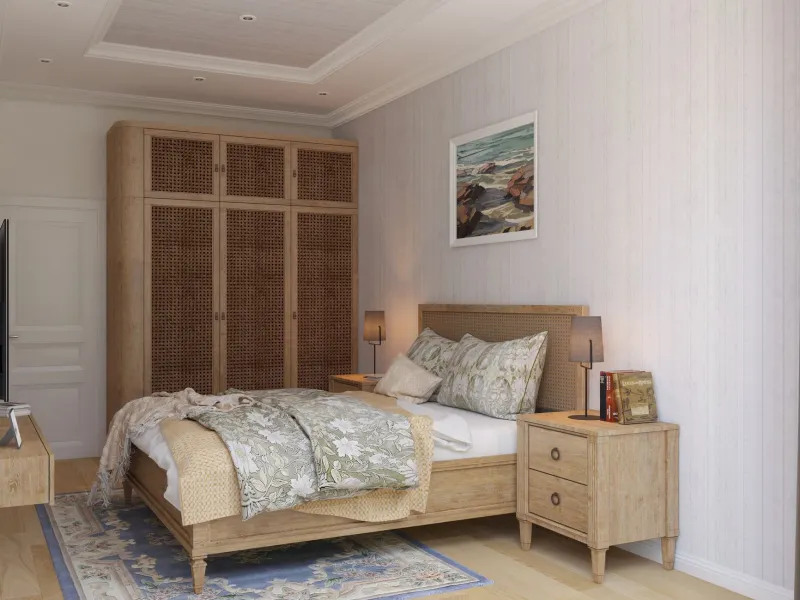
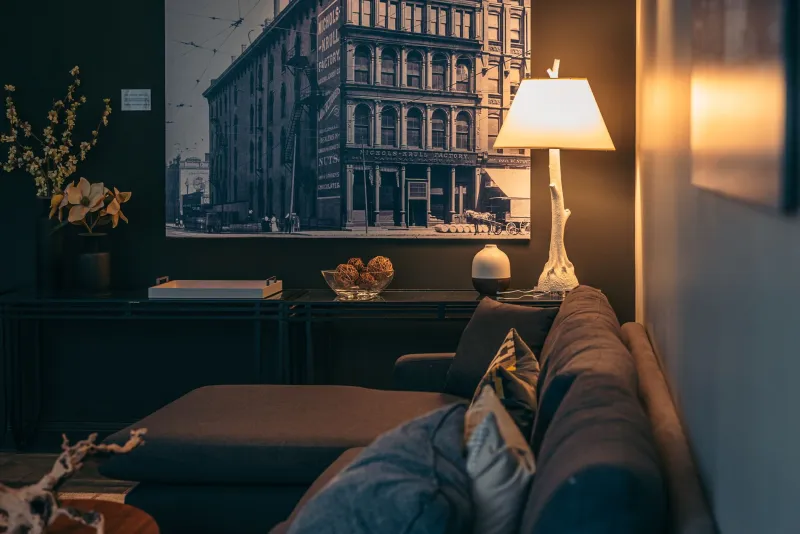
A pair of table lamps on either side of a sofa, connected to a switched outlet, can transform the evening quality of a living room without touching the ceiling. A floor lamp positioned in a dark corner does double duty: it eliminates the shadow that makes a room feel smaller and introduces a new layer of warm, ambient-adjacent light at eye level. Battery-operated LED picture lights are now available in finishes and quality levels that rival hardwired versions, making it possible to illuminate artwork in a rental apartment or a room without convenient wiring access.
The principle in each case is the same: identify where light is absent or wrong, and introduce a source that serves the room's actual needs.
Light as a Design Element in Its Own Right
A room's lighting plan deserves the same deliberate attention given to its furniture, its color palette, and its material selections. Light is not merely a utility — it is the medium through which every other design decision is experienced. The warmth of a wood floor, the depth of a velvet sofa, the sheen of a lacquered surface: all of these are perceived through light, shaped by light, and dependent on light for their full expression.
When a room is lit with care and intention — when its ambient, task, and accent layers are each present, properly scaled, and thoughtfully controlled — the result is something that transcends mere illumination. The room comes alive. Its corners gain depth. Its surfaces acquire texture. Its atmosphere becomes something that can be felt as much as seen.
That is the promise of layered lighting, and it is one of the most attainable transformations available to any interior — regardless of budget, square footage, or scope.