Grounded in Beauty: Why the Floor Beneath Your Feet Deserves the Same Consideration as Every Wall You Face
There is a curious hierarchy that governs most interior design conversations in American homes. Walls are studied, sampled, and deliberated over with great care. Ceilings, once overlooked, have earned increasing attention in recent years. Yet the floor — that vast, unbroken plane that quite literally supports everything a room contains — is frequently the last element considered and the first to be decided by budget alone.
This is a quiet design error with lasting consequences. The floor is not merely a surface. It is a foundation in the truest sense: the material from which a room's entire atmosphere rises. Choosing it without intention is a little like composing a symphony and leaving the bass line to chance.
The Floor as the Room's Organizing Principle
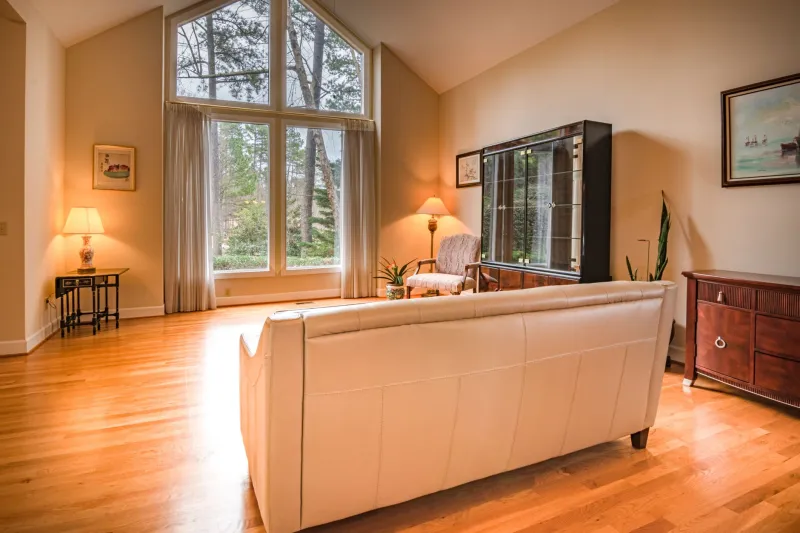
Step back from any well-designed interior and you will notice something: the floor is doing significant work. It defines the room's temperature — visually and literally. A pale, wide-plank white oak floor communicates openness and light; a deeply stained walnut grounds a space with warmth and formality. In open-plan homes, which have come to define much of American residential architecture, flooring is often the only continuous element capable of unifying disparate areas into a coherent whole.
When a designer begins planning a room, the floor should be among the first decisions — not the last. Its tone, texture, and material set the palette from which everything else is selected. Rugs, furniture, wall color, and even the metals used in hardware all respond to what lies beneath them. To select these elements first and force the flooring to accommodate them is to work backward, and the results frequently show it.
Material Honesty and the Question of Longevity
One of the most instructive distinctions a homeowner can make is between flooring that photographs well and flooring that lives well. The two are not always the same.
Engineered hardwood, solid hardwood, natural stone, concrete, and high-quality porcelain tile each carry their own relationship with time. Solid hardwood can be refinished multiple times over decades, evolving gracefully as its patina deepens. Natural stone — limestone, slate, marble — develops a character unique to the household that inhabits it, each mark and variation becoming part of the material's story rather than a flaw to be corrected. These are floors that age honestly.
Conversely, certain popular flooring categories — low-grade luxury vinyl plank, for instance, or heavily distressed laminates — can begin to feel dated or show wear in ways that are difficult to reverse. This is not a condemnation of any material category wholesale; high-quality vinyl plank has earned a legitimate place in high-traffic residential and commercial settings. The point is simply that material selection should account for the full arc of a floor's life, not only its appearance on installation day.
Durability and aesthetics are not opposing forces. The most elegant floors tend to be the most enduring ones, because their beauty is structural rather than cosmetic.
The Acoustic Dimension: What Your Floor Sounds Like
Acoustics represent perhaps the most underappreciated dimension of flooring selection, particularly in an era of open-plan living. Hard surfaces — stone, tile, hardwood — reflect sound, amplifying the energy of a space in ways that can feel either vibrant or exhausting depending on the room's function and the household's lifestyle.
A kitchen or dining area might welcome the liveliness of a hard surface. A bedroom, a study, or a family room where conversation and quiet concentration matter may benefit significantly from softer materials or the strategic layering of area rugs, which absorb sound as effectively as they define zones within a larger space.
This acoustic consideration is especially relevant in multi-story homes, where the flooring material on upper levels directly affects the sound experience on lower floors. Cork, carpet, and certain engineered floors with acoustic underlayment can reduce impact noise substantially — a practical benefit that translates directly into daily comfort.
Scale, Pattern, and the Illusion of Space
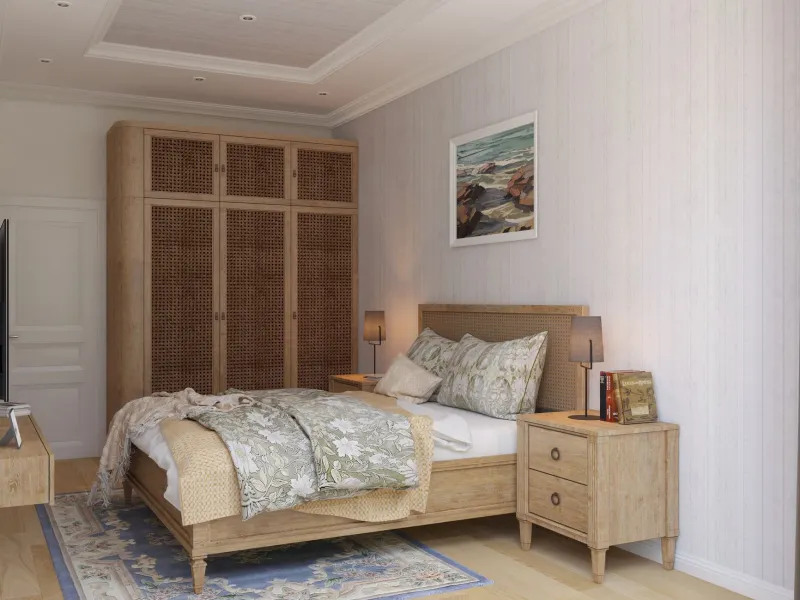
The way a floor is laid is as consequential as the material itself. Wide-plank hardwood visually expands a room; narrow strips can feel busy in larger spaces. Diagonal tile installation draws the eye across the full breadth of a room, making it feel wider. A herringbone or chevron pattern introduces movement and formality simultaneously — a choice well suited to entryways, dining rooms, or any space intended to make a considered first impression.
In smaller American homes and apartments, where square footage is at a premium, these spatial effects carry real weight. A continuous floor material running from an entry through a living area into a kitchen — without interruption or threshold — can make a modest footprint feel significantly more generous. Conversely, frequent transitions between flooring materials can fragment a space visually, making even a large home feel choppy and disconnected.
Pattern also communicates period and personality. A classic black-and-white checkerboard in an entryway signals confidence and wit. A large-format concrete tile in a matte finish speaks to contemporary restraint. Understanding what your flooring communicates before it is installed prevents the common disappointment of a floor that feels mismatched with the architecture it inhabits.
Warmth, Comfort, and the Lived Experience
There is a sensory dimension to flooring that no photograph can fully capture: the experience of standing on it, walking across it, sitting near it on a cold morning. Radiant heat systems beneath stone or tile transform what might otherwise be an unwelcoming surface into one of a home's most coveted features. Cork, one of the more underutilized flooring materials in American homes, offers natural thermal insulation and a gentle resilience underfoot that is genuinely pleasant over long periods of standing.
These physical qualities matter profoundly in the rooms where people spend the most time. A kitchen floor that is beautiful but punishing after an hour of cooking is, in a functional sense, a design failure regardless of its visual merit. Thoughtful flooring selection asks not only what a floor looks like but what it asks of the people who inhabit it.
Bringing It All Together
The most elegantly designed rooms in any American home share a quality of coherence — a sense that every element was chosen in conversation with every other. The floor is not merely a participant in that conversation. It is, in many respects, the one speaking first.
Giving flooring the attention it deserves is not an invitation to extravagance. It is an invitation to intentionality. Whether the choice is a richly grained solid oak, a beautifully veined marble, a thoughtfully specified porcelain, or a high-quality engineered product suited to a demanding household — what matters is that the decision is made deliberately, with the full life of the room in mind.
A floor chosen with care will outlast trends, support every design evolution the room undergoes, and reward its inhabitants every single day. That is not a small thing. That is, in fact, the very definition of a delightful design.