Framed by Light: Treating Your Windows as the Design Elements They Were Always Meant to Be
Consider what a window actually does. It admits light—and with it, the shifting moods of morning, afternoon, and dusk. It frames a view, whether that view is a manicured garden, a city skyline, or a quiet suburban street. It mediates between the controlled environment of your interior and the variable conditions of the world outside. It defines the rhythm of a wall and, in doing so, shapes the proportions of an entire room.
And yet, in the majority of American homes, windows receive less deliberate attention than the throw pillows on the sofa.
This is not a minor oversight. The way a window is treated—its drapery, its hardware, its sill, the way it is integrated into the broader composition of the room—can either elevate a space to something genuinely beautiful or quietly undermine everything else that has been achieved. Professional designers understand this. They approach windows not as openings to be covered but as design opportunities to be realized.
The Architecture of the Window Itself
Before any treatment is considered, a designer examines the window's architectural character. Is it a double-hung sash with traditional divided lights? A casement window with a clean, contemporary profile? A picture window designed to disappear into the view it presents? Each type carries its own design language, and the treatments that honor that language will always outperform those that ignore it.
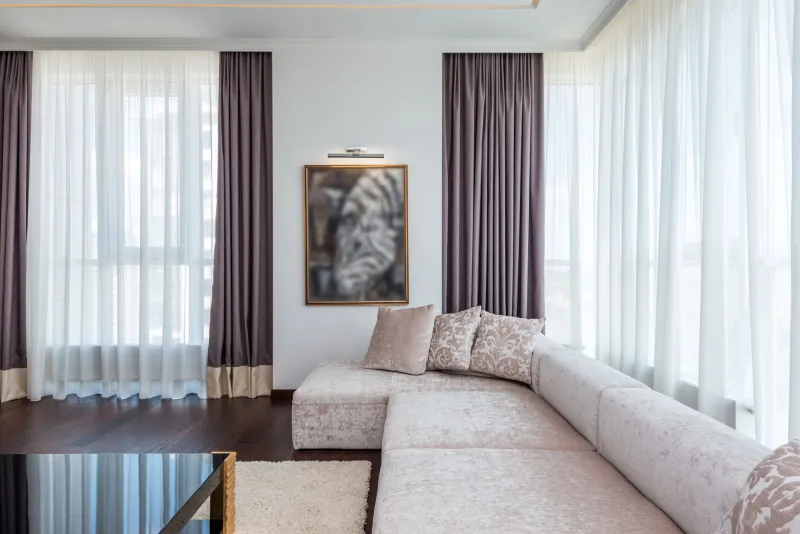
Many homeowners are also unaware of how profoundly window placement affects the perception of a room's proportions. A window positioned lower on a wall can make ceilings feel closer than they are. Drapery panels hung at ceiling height rather than at the window frame—a technique nearly universal among professional designers—restore the visual height that architecture sometimes withholds. The treatment does not merely dress the window; it corrects, amplifies, or reinterprets the architecture around it.
In older American homes, where windows may have been modified or replaced over time without regard for the original proportions, this corrective capacity becomes particularly valuable. A thoughtfully hung curtain panel can reconcile an awkward window with a room that deserves better.
Light as a Material
Natural light is, in the designer's vocabulary, a material—as tangible and workable as linen or limestone. The quality of light that enters a north-facing room in a Chicago winter is categorically different from that which floods a south-facing room in a Phoenix afternoon. Effective window treatment accounts for this difference rather than applying a uniform solution.
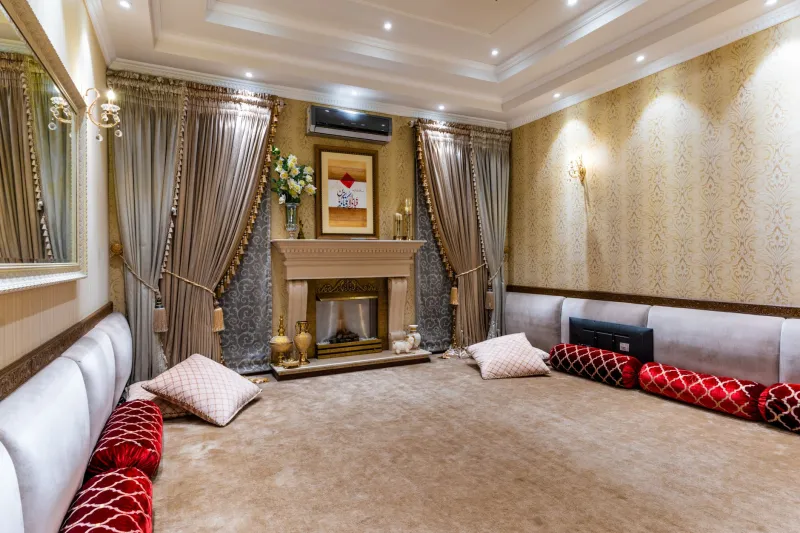
Sheer layers are among the most versatile tools in this regard. A well-chosen sheer diffuses direct light without eliminating it, softening the contrast between illuminated and shadowed areas of a room and creating the quality of luminosity that characterizes the most beautiful interiors. Layered over a blackout or privacy lining, sheers allow a room to modulate its relationship with light across the full range of daily conditions.
The choice of fabric matters considerably. A linen sheer carries light differently than a silk organza or a cotton voile. Each imparts its own character to the room, and that character shifts with the angle and intensity of the light passing through it. This is not a minor aesthetic distinction; it is one of the primary ways that window treatments contribute to the sensory experience of a room.
The Sill as a Stage
One of the most consistently underutilized surfaces in American interior design is the window sill. In rooms where windows are deep-set—a characteristic of many craftsman bungalows, Tudor revivals, and mid-century homes—the sill offers a horizontal surface of considerable potential. It can serve as a display ledge for a considered collection of objects, a resting place for a single sculptural plant, or simply a beautifully finished surface that draws the eye downward and anchors the window within the room.
Even in rooms where the sill is shallow, its finish deserves attention. A painted sill in a color that relates to the trim palette, a marble sill in a bathroom where the window sits above a soaking tub, a tiled sill in a kitchen that extends the visual logic of a backsplash—these are small decisions with disproportionate design returns.
The sill is also the point at which the interior and the exterior most directly meet. How it is finished communicates something about the care with which the entire room has been considered. A neglected sill, regardless of the quality of the drapery above it, reveals an incomplete approach to the window as a design element.
Hardware as Jewelry
Drapery hardware occupies the same position in a window composition that jewelry occupies in a finished outfit: it is not the primary element, but it is often what distinguishes the considered from the careless. A curtain rod of appropriate diameter and finish—matte brass in a warm, traditional room; brushed nickel in a more contemporary setting; an unlacquered bronze that will patina gracefully over time—contributes to the visual coherence of the entire window treatment.
The scale of hardware relative to the weight of the drapery panel is a relationship that rewards careful attention. A heavy velvet panel requires a rod of sufficient substance to read as intentional. A lightweight linen panel, by contrast, is well served by a more slender profile. When these relationships are honored, the hardware becomes part of the composition rather than a mechanical afterthought.
The Window in Context
Ultimately, the most important principle governing window design is the same one that governs every other design decision: the window must be understood in relation to the room it inhabits, not in isolation. The treatment that is exquisite in a formal dining room may feel oppressive in a breakfast nook. The clean, unadorned window that is perfect in a minimalist loft may feel incomplete in a room of greater warmth and texture.
This is why professional designers resist the appeal of trend-driven window solutions and return instead to the specific conditions of each room: its light, its architecture, its purpose, and the atmosphere it is meant to create. The window that is designed with this level of attention becomes something more than a practical opening in a wall. It becomes one of the most expressive and enduring elements in the room—exactly what it was always meant to be.