The Quiet Piece: How to Choose Furniture That Serves the Room Rather Than Steals It
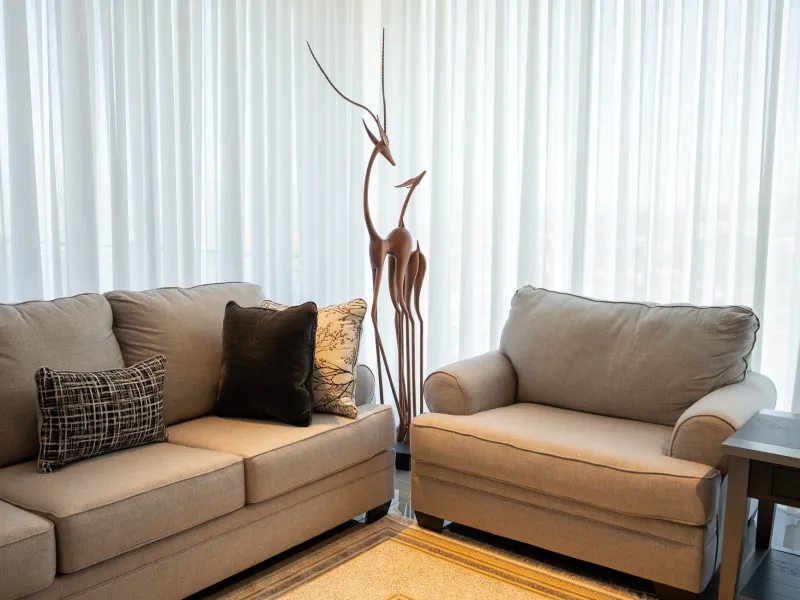
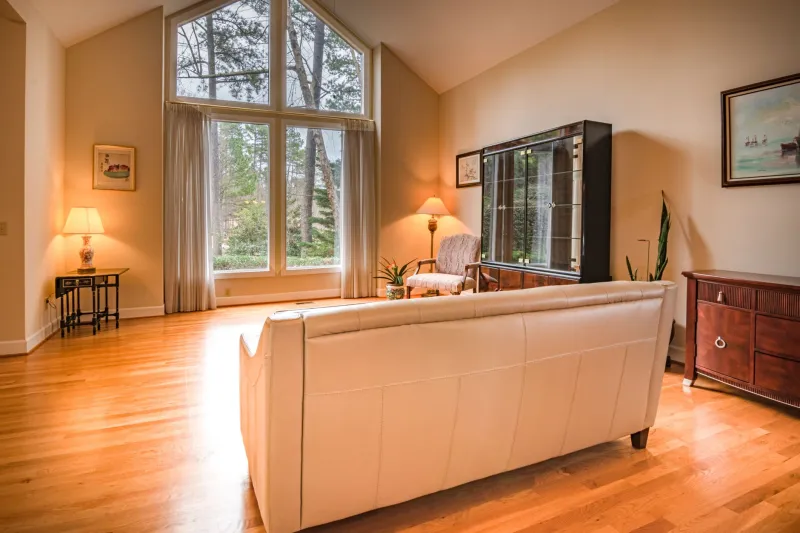
There is a particular kind of room that stops you at the threshold. Not because something within it is shouting for your attention, but because everything within it is speaking at precisely the right volume. The sofa anchors without overwhelming. The side table offers itself without insisting. The cabinet holds its place along the wall as though it has always been there and always will be. This is the result of deliberate, disciplined furniture selection — and it is far more difficult to achieve than it appears.
Most people approach furniture shopping as a series of individual decisions: Does this chair look beautiful? Is this table well-made? Will this dresser fit against that wall? These are not wrong questions, but they are incomplete ones. The more important question — one that separates the thoughtful interior from the merely assembled one — is: How does this piece relate to everything else in the room?
Why Furniture That Competes Undermines Even the Best Spaces
Every piece of furniture carries a visual weight. That weight is determined not only by its physical size, but by its color, its material finish, its silhouette, and the degree of ornamentation it carries. A chair upholstered in a vivid print carries far more visual weight than a chair of equal dimensions in a soft linen. A heavily carved wooden console commands the eye in a way that a streamlined lacquered piece does not.
When too many pieces within a single room carry high visual weight, the eye has nowhere to rest. The space becomes exhausting rather than inviting — a kind of visual argument in which every participant is speaking at once. This is the fundamental problem with furniture that competes: it does not simply fail to enhance the room; it actively diminishes it.
The antidote is not to select only plain, unremarkable pieces. It is to understand the role each piece is meant to play and to select accordingly.
The Principle of Scale and Proportion
Before material or color enters the conversation, scale must be settled. A room's architecture establishes a proportional framework — ceiling height, window placement, floor area — and furniture must respond to that framework rather than ignore it.
A common misstep in American living rooms, particularly in open-plan homes, is the selection of furniture scaled to a smaller, more intimate room. Low-profile sofas and petite occasional tables can feel adrift in a generous great room, forcing the space to feel sparse rather than serene. Conversely, a large sectional introduced into a modest apartment living room will crowd the architecture and leave little room for the eye to breathe.
Designers often work with a simple guiding principle: the dominant seating piece in a living room should occupy between one-third and one-half of the room's primary wall or anchor zone. This is not a rigid formula, but a useful starting point for calibrating scale before anything is purchased or placed.
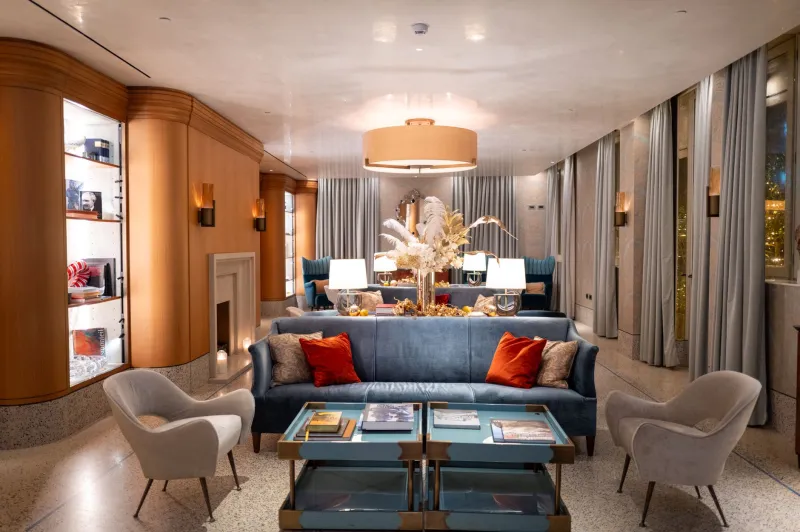
Proportional harmony also extends to the relationships between pieces. Coffee tables, for instance, are frequently chosen too small relative to the sofa they serve. A table that extends roughly two-thirds the length of the sofa, and sits within two inches of the sofa's seat height, will read as intentional. One that floats at an arbitrary distance or appears diminutive against the sofa's length will quietly undermine the composition.
Material Restraint as a Design Virtue
Once scale is addressed, material coordination becomes the next discipline. This does not mean that every piece must share the same finish or fabric — such uniformity produces rooms that feel showroom-flat rather than lived-in and considered. It means, instead, that materials should be in conversation with one another.
A useful method is to work within a material palette of three to four primary finishes across all furniture in a given room. A warm walnut dining table might be echoed in the wood tones of a sideboard and the legs of upholstered chairs, while a brushed brass light fixture and cabinet hardware provide a secondary metallic note. These repetitions, even when subtle, create a visual thread that draws the room together without making the selection feel contrived.
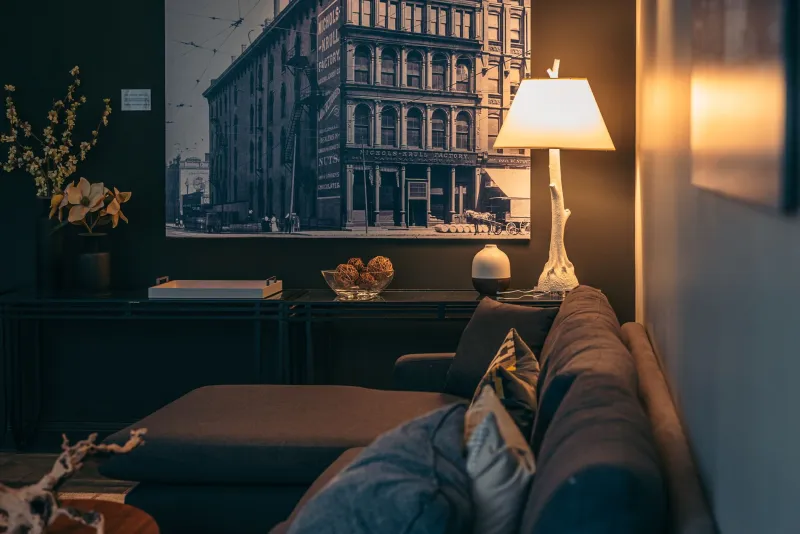
Upholstery presents its own set of decisions. Pattern, in particular, must be rationed with care. One patterned piece — a printed accent chair, a textured ottoman — can enliven a room considerably. Two patterned pieces require careful scale differentiation to avoid visual conflict. Three or more, unless expertly coordinated, risk the kind of competition that exhausts rather than delights.
The Psychology of Furniture That Knows Its Place
There is a psychological dimension to furniture selection that is rarely discussed in practical terms but is felt in every room we inhabit. Furniture that is scaled correctly, materially coherent, and positioned with intention creates a sense of ease — a subconscious signal that the environment has been considered, that nothing has been left to chance.
This ease is not passivity. A well-chosen piece of furniture can possess tremendous character — a beautifully turned leg, a sumptuous fabric, a quietly unusual silhouette — without demanding that it be noticed. The difference lies in confidence. A piece that is secure in its role within a composition does not need to announce itself. It simply contributes.
This is, in many ways, the design philosophy that underlies the most enduring interiors: not the accumulation of impressive objects, but the cultivation of a space in which every element has earned its place and is content to hold it.
Practical Steps Before Any Purchase
For those approaching a room refresh or a new furnishing project, several practices can help translate this philosophy into tangible decisions.
First, establish the room's anchor piece before selecting anything else. In a living room, this is typically the primary sofa. In a bedroom, the bed. Every subsequent selection should be evaluated in relation to that anchor — not independently.
Second, create a simple material board before purchasing. This need not be elaborate: a collection of fabric swatches, finish samples, and paint chips laid side by side will reveal conflicts and harmonies that are impossible to see when items are evaluated in isolation on a showroom floor or a website.
Third, consider the room's negative space as deliberately as its filled space. A piece of furniture that is technically beautiful may still be wrong for a room if it eliminates the breathing room that makes the composition feel generous. Restraint in quantity — choosing fewer, better pieces — is almost always the more elegant path.
Finally, resist the instinct to fill a room completely before living in it. Spaces reveal their needs over time, and the furniture added thoughtfully after a period of habitation is often more precisely right than anything selected in a single decisive shopping session.
A Room That Listens
The rooms we return to with the deepest satisfaction are rarely those in which we can name a single remarkable piece. They are the rooms in which everything feels as though it belongs — where the furniture has been chosen not to impress, but to serve. That quality of quiet coherence, of visual harmony achieved without sacrifice of character, is the hallmark of design that has truly been thought through.
It is, in the end, the difference between a room that speaks and a room that listens — and the latter, almost always, is the more beautiful of the two.