Beyond the Visual: How Texture, Sound, and Scent Complete a Room's Design
Walk into a room that has been designed with genuine intention, and something happens before you have fully processed what you are seeing. The air carries a faint warmth. The floor yields slightly beneath your step. A quiet hum — or perhaps a deliberate absence of noise — settles over you like a well-fitted coat. You feel, before you see.
This is not coincidence. It is craft.
Interior design has long been discussed in almost exclusively visual terms: color palettes, proportion, light, form. These are, of course, essential. But a room that speaks only to the eyes is, in a very real sense, only half-finished. The spaces that remain with us — the hotel lobby we still think about years later, the dining room at a friend's home that felt impossibly right — almost always owe their power to something more layered. They engaged the full range of human perception.
For those seeking to create spaces that are not merely beautiful to look at but genuinely pleasurable to inhabit, the sensory dimension of design deserves serious, considered attention.
The Language of Touch: Why Texture Is Never Purely Decorative
Texture is often treated as a finishing touch — a throw pillow here, a woven basket there. In practice, it functions as something far more fundamental. The human nervous system is exquisitely sensitive to tactile experience, and the materials we surround ourselves with communicate constantly, even when we are not consciously aware of it.
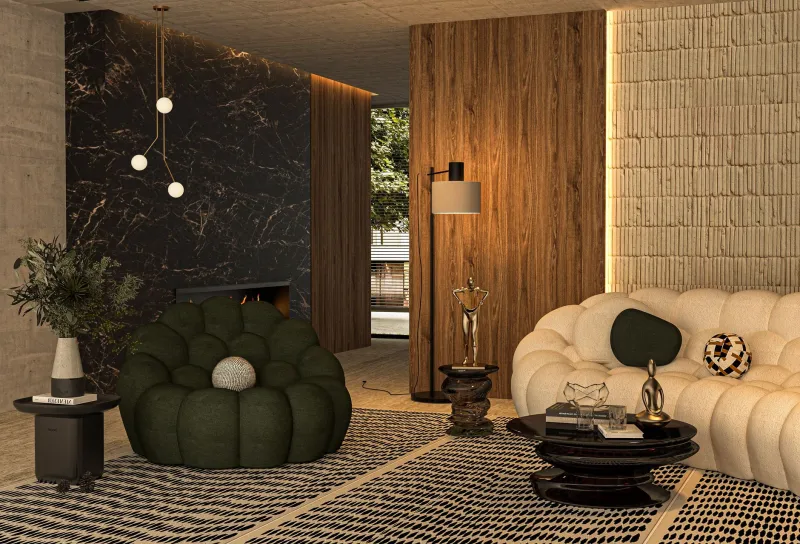
A room lined predominantly in smooth, hard surfaces — polished stone, lacquered cabinetry, glass — can feel efficient and striking, but it can also register, subconsciously, as cold or unwelcoming. Introduce a linen curtain that moves with the air, a nubby wool area rug underfoot, or a raw-edge wooden table whose surface carries the memory of the tree it came from, and the room begins to breathe.
The principle here is contrast and conversation. Texture gains meaning in relation to other textures. A velvet sofa reads as extraordinarily luxurious when placed against a matte plaster wall; the same sofa against a glossy surface loses some of its softness. Thoughtful designers treat tactile layering the way a composer treats instrumentation — each material chosen not only for its individual character but for how it plays alongside the others.
For residential clients, this often means revisiting the surfaces that get the most physical contact: the upholstery of a favorite chair, the handles of kitchen cabinetry, the material of a stair railing. These are the points where a home literally meets its inhabitants, and they deserve more attention than they typically receive.
The Acoustic Dimension: Designing for How a Room Sounds
Acoustics are among the most underappreciated elements of residential design in the United States, where open floor plans and hard-surface finishes have become architectural defaults. The result, in many homes, is a kind of ambient noise that residents learn to tolerate without ever recognizing as a design problem.
Sound shapes mood with remarkable efficiency. Research in environmental psychology has consistently demonstrated that excessive reverberation increases stress and reduces concentration, while spaces with appropriate acoustic absorption tend to feel calmer and more inviting. A room that sounds good — where conversation flows without strain, where footsteps don't clatter, where the ambient noise of the household remains comfortably muffled — is a room that feels good, even if the occupant cannot articulate why.
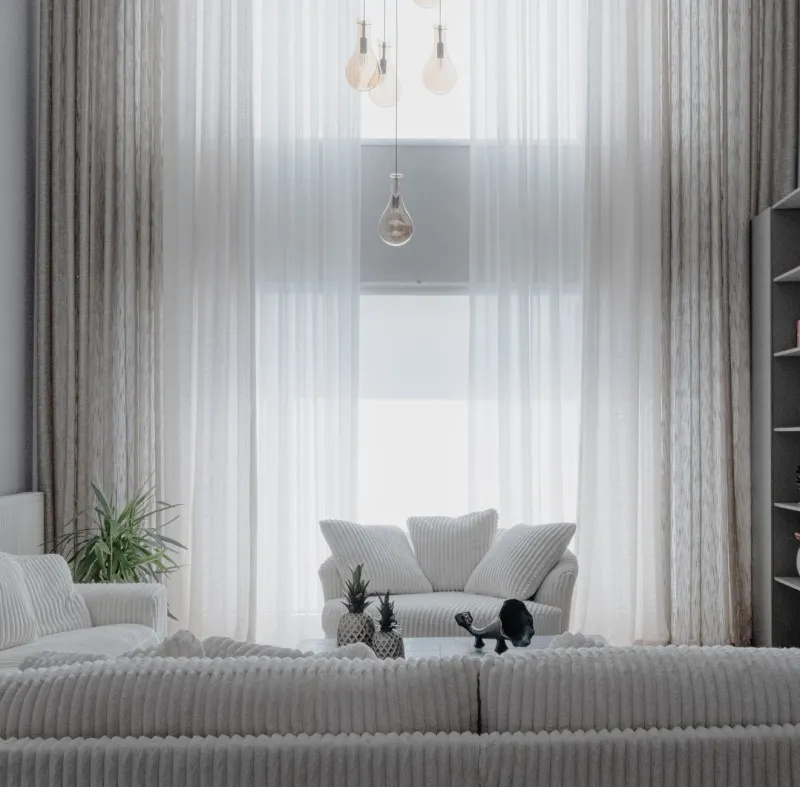
The practical tools available to designers and homeowners are varied and, in many cases, beautiful. Upholstered furniture absorbs sound. Heavy drapery softens the acoustic signature of a room dramatically. Area rugs on hardwood floors reduce impact noise and dampen echo. Bookshelves filled with books function as surprisingly effective diffusers. Even the placement of art — particularly large-format pieces with fabric or padded mounting — contributes to a room's acoustic character.
For those undertaking more significant renovations, acoustic insulation between floors and rooms, and the selection of solid-core interior doors, can transform the livability of a home in ways that no amount of decorative effort can replicate. The investment is invisible but felt every single day.
There is also the matter of intentional sound — the considered introduction of water features, the soft background of a well-placed speaker system, or simply the preservation of quiet in spaces designed for rest. A primary bedroom that is genuinely acoustically separated from the household's active areas is a luxury that rivals any material finish.
The Art of Scent: Fragrance as Architectural Element
Of all the sensory dimensions available to a designer, scent is perhaps the most direct path to emotional memory. The olfactory system connects to the limbic region of the brain — the seat of emotion and memory — more immediately than any other sense. A fragrance encountered in a beautifully designed room becomes inseparable from the experience of that room, sometimes for decades.
This is not a trivial consideration. The homes and commercial spaces that feel most distinctive — most themselves — often carry a signature scent, whether intentional or not. The challenge for the thoughtful designer is to make that signature deliberate rather than accidental.
In residential settings, this begins with the materials themselves. Natural wood, linen, leather, beeswax candles, fresh flowers, and stone all carry their own olfactory character. A room furnished primarily in natural materials will smell fundamentally different — and, for most people, more appealing — than one dominated by synthetics and off-gassing finishes. Choosing low-VOC paints, natural fiber textiles, and solid wood furniture is not only an environmental preference; it is a sensory one.
Beyond the materials, intentional fragrance can be introduced through diffusers, candles, or botanical arrangements calibrated to the function of each space. Lighter, fresher scents — citrus, green tea, eucalyptus — tend to support focus and energy, making them well-suited to home offices and kitchens. Warmer, more grounded notes — sandalwood, amber, vetiver — lend themselves to living rooms and bedrooms, where the goal is ease and restoration.
The key discipline here is restraint. Fragrance that announces itself is fragrance that has been misapplied. The goal is a scent presence that registers as comfort rather than performance — something a guest notices only when they leave, and find themselves missing.
Bringing It Together: The Fully Sensory Room
Designing for all five senses does not require a larger budget or a more complicated brief. It requires a different kind of attention — a willingness to evaluate a space not only by how it photographs but by how it feels to stand inside it at seven in the morning, or to entertain in on a winter evening, or to retreat to after a long day.
Begin with an honest audit of any room you are designing or reconsidering. Sit in it quietly. What do you hear? What do you smell? What does the upholstery feel like beneath your hands? What happens underfoot? These questions will surface opportunities that a purely visual assessment will miss every time.
The rooms that earn a place in memory — that visitors describe as feeling like home, or like a deep exhale — are almost never the result of a single brilliant visual gesture. They are the accumulation of many considered decisions, each one asking: how will this be experienced? Not merely seen, but truly experienced.
That is, ultimately, the quiet ambition behind every space that earns the word delightful.