The Decisive Room: Why Committing Fully to a Design Vision Produces Spaces Worth Living In

There is a particular kind of design paralysis that afflicts even the most educated, tasteful, and well-resourced homeowners. It does not stem from a lack of ideas — quite the opposite. It stems from an abundance of options, a fear of being wrong, and a cultural appetite for the reversible that has made commitment feel, somehow, reckless.
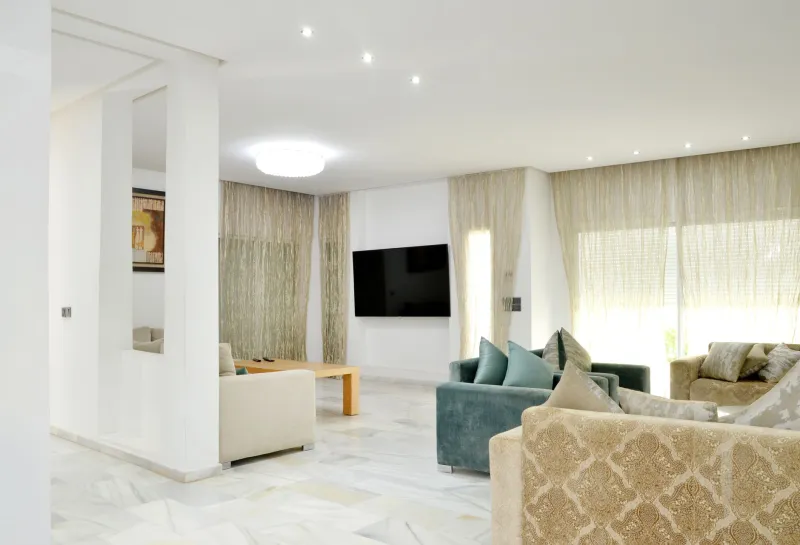
The result is predictable and pervasive: rooms that are neither one thing nor another. Walls painted in the most inoffensive shade of greige the manufacturer offers. Furniture selected because nothing about it is objectionable. Rugs, pillows, and art chosen to offend no one, including the people who live with them. These rooms are not failures in the conventional sense — they are clean, they are functional, and they photograph adequately. But they do not delight. They do not stay in memory. They do not feel like anyone in particular lives in them.
This is the cost of indecision, and it is higher than most homeowners realize.
Why We Hedge — and Why It Backfires
The instinct toward design caution is not irrational. Homes represent significant financial investment, and the fear of making an expensive mistake is entirely understandable. The shelter industry has also been remarkably effective at marketing neutrality as sophistication — selling the idea that the wisest design choice is always the one that could belong to anyone.
But there is a difference between restraint and timidity. Restraint is a deliberate design decision: the choice to edit, to simplify, to allow a single strong element to carry a room. Timidity is the absence of decision — the selection of the middle option because it feels safest, not because it serves the room best.
The distinction matters because restrained rooms feel considered and calm, while timid rooms feel unfinished and unresolved. Guests in a restrained room sense the hand of someone who knew exactly what they wanted. Guests in a timid room sense the absence of that hand, even if they cannot name what is missing.
Commitment Is Not the Same as Permanence
One of the most liberating reframings available to any homeowner is this: committing to a design choice does not mean committing to it forever. It means committing to it fully, for now, in service of a room that functions as a coherent whole.
Paint, for instance, is among the most reversible decisions in a home. A gallon of quality interior paint costs between forty and eighty dollars. The labor to repaint a room, while not trivial, is entirely manageable. And yet paint color is where homeowners most frequently lose months to indecision — living with sample swatches taped to the wall, returning to the store for additional rounds of testing, and ultimately selecting a color so cautious that it barely reads as a choice at all.
The designer's approach is different. A designer selects a color that genuinely serves the room's purpose and light conditions, commits to it, and trusts the process. If the result is not perfect — and perfection is not the standard — they adjust. The adjustment takes a weekend. The indecision had already consumed months.
Furniture and larger investments deserve more deliberation, certainly. But even here, the framework is the same: gather sufficient information, make the best decision available with that information, and commit. A sofa that you chose with genuine conviction and that turns out to require reupholstering in five years has served you better than a sofa you settled for reluctantly and resented from the first afternoon.
How to Build a Framework for Confident Decisions
For homeowners who find design commitment genuinely difficult, the problem is rarely taste — it is process. Without a clear framework, every decision exists in isolation, and isolated decisions invite endless second-guessing. The following approach has served our clients well.
Begin with one non-negotiable. Every room should have at least one element that you love without reservation — a piece of furniture inherited from a family member, a fabric that you have wanted to use for years, a color that has always felt like yours. Design the rest of the room around that element. When every subsequent decision is made in service of something you already love, the room develops coherence naturally, and indecision has fewer places to take root.
Set a decision deadline. This may sound mechanical, but it is genuinely effective. Establish a date by which the primary decisions for a room — paint color, primary furniture, flooring — will be finalized, and hold to it. The quality of a decision made on a self-imposed deadline is rarely worse than the quality of a decision made after months of deliberation. What changes is not the outcome but the time spent arriving at it.
Distinguish between reversible and irreversible decisions. Not all design choices carry the same consequences. Paint, soft furnishings, and decorative accessories are highly reversible. Built-in millwork, tile, and structural changes are not. Reserve your most careful deliberation for the latter category, and extend yourself more freedom with the former. This calibration alone eliminates a significant portion of unnecessary anxiety.
Trust your first instinct more than your third opinion. The design industry is awash in perspectives — from well-meaning family members to online communities to professional consultants offering contradictory advice. Your initial response to a material, a color, or a piece of furniture is frequently more reliable than the opinion of someone who has never stood in your room. Gather input from sources you genuinely trust, then make the decision yourself.
The Rooms That Reward
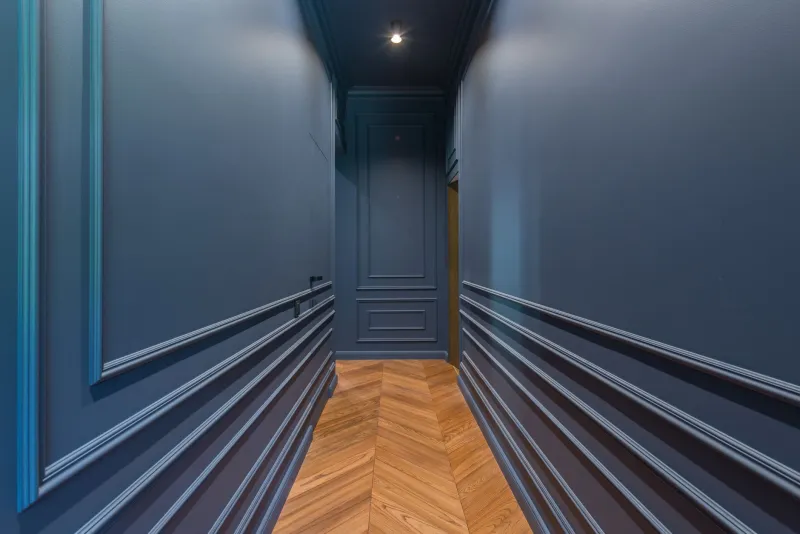
The homes that earn the deepest affection — from their occupants and from guests — are almost never the homes where every decision was safe. They are the homes where someone chose the unexpected wallpaper in the powder room, committed to the dark, dramatic library that everyone said would feel too small, or upholstered the dining chairs in a pattern that could not be mistaken for anyone else's taste.
These rooms reward their inhabitants in proportion to the courage it took to create them. They feel inhabited rather than staged. They reflect genuine personality rather than aggregate preference. They are, in the truest sense, delightful — because delight requires surprise, and surprise requires the willingness to commit to something specific.
Indecision is not caution. It is simply the slower path to a less satisfying destination. The decisive room, chosen with conviction and furnished with care, is always worth the commitment it required.